Blog
Our articles

With new facilities and career opportunities, Allaire Health Services is revolutionizing health care in Morris County
Raising the expectations with hotel style amenities, while delivering the best in care excellence
Award-winning health care provider Allaire Health Services is expanding its commitment to Morris County with the opening of Fallsview Rehabilitation and Nursing in Boonton. The new facility represents Allaire Health Services’ third Morris County location.
Click Here to read the full article from NJ.com

Allaire CEO Recognized At Delta Dental Leaders in Business Awards Luncheon
On November 3, 2022, Allaire Health Services CEO, Ben Kurland was bestowed the “Large Business Award” by Meghan Hunscher, President of the Morris County Chamber, for his impact on the community. Meghan paid tribute to Ben’s leadership and focus on operational turnaround which is the linchpin of Allaire’s successful growth. Meghan did not forget to mention that Allaire is a complex, comprehensive multi-facility company that not only provides employment and economic growth but aging in place options for the senior population of Morris County. Allaire Health Services is proud to be at the forefront of Revolutionizing Care Delivery™ in North Jersey!
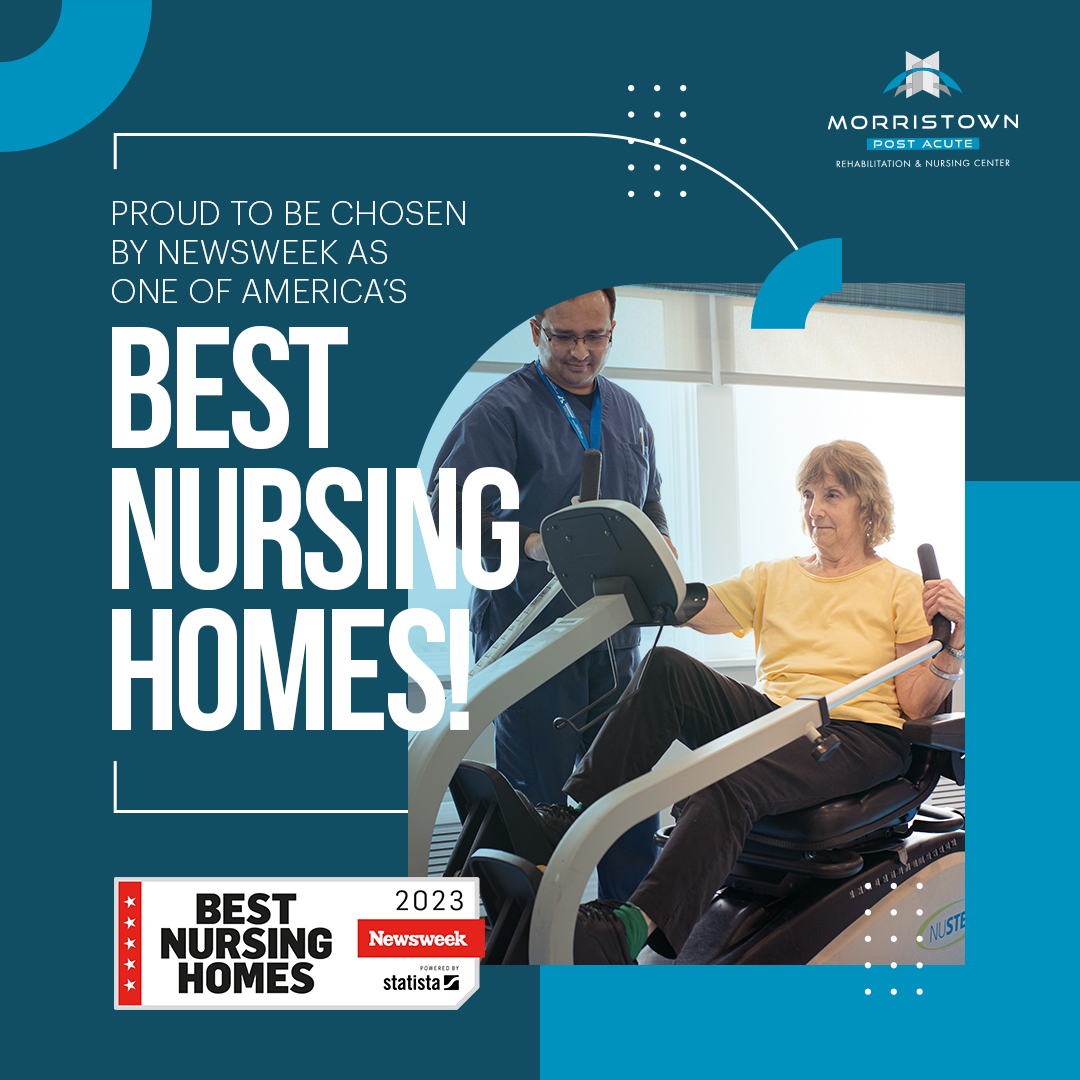
Morristown Post Acute Awarded as One of Newsweek’s Best Nursing Homes 2023
Morristown Post Acute Rehabilitation & Nursing, a proud member of Allaire Health Services, has been recognized on Newsweek’s Best Nursing Homes 2023 list. This prestigious award is presented by Newsweek and Statista Inc., the world-leading statistics portal and industry ranking provider. The awards list was announced on September 28, 2022 and can currently be viewed on the Newsweek’s website.
The Best Nursing Homes 2023 ranking lists the best nursing homes in the 25 states with the highest number of facilities according to The United States Census Bureau. These states include Alabama, Arizona, California, Colorado, Connecticut, Florida, Georgia, Illinois, Indiana, Kentucky, Louisiana, Maryland, Massachusetts, Michigan, Minnesota, Missouri, New Jersey, New York, North Carolina, Ohio, Pennsylvania, South Carolina, Tennessee, Texas, and Virginia. The list evaluates the best nursing homes according to key performance data, peer recommendations, accreditation, and the response to the COVID-19 pandemic.
Based on the results of the study, Morristown Post Acute is ecstatic to be recognized as one of Newsweek’s Best Nursing Homes 2023.
“The Healthcare industry is forever changing and the honor of being named one of Newsweek’s Best Nursing Homes 2023 is proof that our Morristown Post Acute team changes with it. Whatever the need – our team is there, always innovative and continuing to master clinical complexities and capabilities, always caring and treating every patient like an extension of our own family, and always available to our hospital partners to ensure the transition from their setting to ours is a seamless one. That’s the Morristown Post Acute way! As an organization we could not be prouder of our team and the care they provide!” says Kasia Bohaterewicz-Briody, Senior Regional Director of Strategic Partnerships at Allaire Health Services.

Allaire Leadership Summit 2022
What happens when the greatest talents in healthcare come together?
You get this.
Revolutionizing Care Delivery is our motto and mission and we’ll never stop.

Spotlight on Chava Goldschmidt, Chief Nursing Officer at Allaire Health Services
Some of us don’t have to look far to find our heroes. For Chava Goldschmidt, Chief Nursing Officer at Allaire Health Services, it was her father. Dr. David Epstein was a beloved Philadelphia geriatrician who ran a private practice and worked as the medical director of Waverly Heights, a retirement community in Gladwyne, PA. As a child, Goldschmidt remembers accompanying her father on his Sunday morning rounds. She saw how he interacted with his patients and the impact he made on their lives; it was the reason Goldschmidt later chose to attend University of Pennsylvania’s School of Nursing.
It was during her final semester of nursing school that Goldschmidt’s father died of cancer at the age of 57. It was a devastating loss for Goldschmidt, but one that steeled her resolve to make an impact in healthcare. After graduation, she took a position as the MDS Coordinator at AristaCare Cherry Hill, where she made it her business to learn from and connect with residents and staff alike. Within a few years, she was promoted to the Director of Nursing.
Goldschmidt loved her new role. “It was the perfect marriage of being involved in patient care and getting to think big picture; I was challenged every day to problem solve creatively, and to engage the staff in that kind of thinking,” she recalled. The focus in the nursing home industry was shifting from long-term care to more acute patients, and Goldschmidt wanted to make sure her staff had the competence and confidence to meet the needs of their patients. She created an education program called “AristaCare University,” which offered skill-based, hands-on
earning to nurses and CNAs. This initiative, along with other quality assurance efforts, allowed Goldschmidt’s team to raise the bar of clinical performance and to achieve better outcomes for the patients and residents they served.
Goldschmidt’s next move was into the world of medical legal work, where she became certified as a life care planner and assisted attorneys as an expert witness. “It was a great, flexible job,” she said, “but I missed the hustle and energy of skilled nursing. I wanted to make an impact on the patient experience.” This was, after all, why she had gotten into the field in the first place.
The solution came in 2017, when Allaire CEO Ben Kurland invited Goldschmidt to come on board as a clinical operations consultant at the newest Allaire facility. She jumped at the opportunity, and joined Allaire’s executive team full-time in 2018 as the Chief Nursing Officer. A positive patient experience is the result of many moving pieces. “My job is to make sure those pieces fall into place,” Goldschmidt said. Allaire’s clinical programs are built around the needs of their patients, communities and hospital partners. “My goal,” says Goldschmidt, “is to make sure every Allaire staff member is equipped with the tools to deliver competent, compassionate, and clinically excellent care.” A believer in the power of data, Goldschmidt tracks and trends key performance indicators in each Allaire facility and relies on that data to inform quality improvement efforts. She also runs Allaire University, tailoring it to each facility, and ensuring that the leadership in each facility is a good fit.
At Allaire, Goldschmidt has the satisfaction of helping one of the leading healthcare providers in the region live up to its name. It is everything she was looking for – and more. Surely, her father would be proud.

Senior Scoop: Advice to Vaccinated Seniors on COVID-19 Q & A: Don’t Let Your Guard Down
Experts from CentraState Medical Center and Allaire Health Services answer common questions about what to expect once you’ve been vaccinated. Read the full article by clicking here and scrolling to the 3rd page for the interview with Ben Kurland, CEO at Allaire Health Services.

Pivoting providers: SNFs focusing on transitional care and rehab welcome COVID-19 patients
Before the COVID-19 crisis, Allaire Health Services served a mix of rehab patients, individuals with medically complex conditions ranging from traumatic brain injury to congestive heart failure, and long-term care residents.
Four facilities in New Jersey and Pennsylvania featured amenities such as private suites, gleaming rehab gyms and spaces dedicated to relearning activities of daily living. Respiratory therapists and wound care specialists directed therapies using equipment more commonplace in hospitals.
Over the last year, the upscale chain’s emphasis on clinical staffing and subacute recovery became lifesavers — both for patients who would continue to fill beds throughout much of the last year and for the business itself.
“Change is the one thing that’s consistent in healthcare,” CEO and Founder Ben Kurland said. “We try to gear everything that we do in our centers to the population that we’re dealing with, and we work with our local community, our local hospitals, to see what they need from us.”
For Allaire, existing relationships and new collaborations led to significant growth despite COVID-19. By early this year, the chain had nearly doubled in size, adding a facility each in New Jersey, New York and Vermont. Pennsylvania health officials also tapped Allaire to run a facility overrun by COVID-19.
While much of the industry found itself hobbled by low occupancy and sustained consumer fears, providers focused on intense rehabilitation and transitional care were typically better prepared to pivot. That’s largely because they were able to demonstrate their value to upstream providers in need of reliable outlets for step-down patients.
“There’s no question,” said Bob Kramer, co-founder and former CEO of the National Investment Center for Seniors Housing & Care. “Specialized clinical programs working in conjunction with health systems … are seeing real pick up and real demand of a sort they weren’t before.”
While the trend toward targeting clinically complex patients is nothing new, observers like Kramer say the continued push toward payment incentives that unite payers and providers around risk and ongoing, specific needs related to COVID-19 have hastened the transformation.
Kramer, who last year founded Nexus Insights to help develop new aging services models, calls this sub-sector “peri-acute” care, likening it to a protective moat around the castle that is acute care.
Putting procedures in place
Like Allaire, Kansas City-based Ignite Medical Resorts grew significantly during 2020. Much of that expansion was anticipated due to new partnerships with LTC Properties and Sabra Health Care real estate investment trusts.
But CEO and co-founder Tim Fields also struck a deal to run a new Milwaukee location in conjunction with NHI and acquired two additional Kansas City properties from Ascension in November. Ignite will break ground on an 11th location later this year.
Fields said navigating the pandemic while on a growth trajectory required nimble leadership and an ability to frequently repurpose people and equipment.
He decided late last March that Ignite would stand up dedicated COVID-19 units to reinforce relationships with key acute partners.
“We realized strategically we needed to flip the switch,” he said. “We get 98 to 99% of our business from the hospitals. We have to have the pulse all the time. We saw this as an opportunity to be part of the solution.”
Buildings that typically filled 90% of beds with traditional rehab patients could have 75% COVID-19-positive patients and 25% rehab patients without COVID-19. After June, the mix fluctuated but census held steady.
“We were very communicative about how we could admit both patients,” Fields said. “Whether you’re doing broken hips, pneumonia, wound care or COVID, it’s about putting the right procedures in place.”
Allaire also created COVID-19 units, starting with a floor at its Morristown facility. Careful attention was given to isolation precautions — including visitor restrictions that predated state and federal mandates — use of private rooms, and access to PPE.
“I personally was on the phone sometimes several times a day with the hospitals,” Kurland said. “What do you need? How do we get it? What could we do? There’s a high level for collaboration. I think when they saw how engaged we were, their confidence really went up. They said, ‘You know what? We could send these patients there.’”
The idea that these conversations were taking place with both upstream and downstream partners — and sometimes in group chats with peers in the same region — isn’t surprising, given the pressures coming from managed care.
Kramer noted that select SNFs can rival capabilities offered in long-term acute-care hospitals or inpatient rehabilitation facilities, but at lower prices. Demonstrating that they don’t send patients back to the hospital — a pain point for home health — also sweetens the deal, especially for partners in incentive models.
“If you’re a payer, you do everything you can to keep a patient from a hospital stay,” he said. “Whoever’s holding the dollar risk, clearly you’re going to like dealing with a facility that’s new, that has brand new equipment and higher staffing ratios.”
Proving their worth
Allaire’s data sharing, infection prevention success and willingness to pay for additional staff caught the eye of Pennsylvania officials. In May, they offered Allaire a contract to manage Brighton Rehabilitation and Wellness Center, where 73 residents and a housekeeper died during COVID-19’s peak.
The building’s first temporary manager lasted only a week. Allaire’s contract was extended last summer and, at press time, was ongoing — providing an additional source of income.
In some cases, Kurland hired new staff for the communities Allaire took over. He reassigned workers if they were willing and relied on an existing program that uses hospital nurses to train nursing home staff on caring for complex patients.
Knowledgeable workers were key to securing COVID-19 partnerships with hospitals, said Mark Fritz, president of Bridgemoor Transitional Care and its four Texas locations. Three of his facilities have full-time respiratory therapists, and Bridgemoor also employs infusion-trained nurses.
“Our teams are used to working in higher acuity so it wasn’t as hard for us to make changes,” Fritz said . “Those things were not something we had to re-tool for.”
Bridgemoor experienced a “shocking” occupancy drop of about 50% after Texas officials stopped elective surgeries.
Like many providers, Bridgemoor worked with its real estate partner, Invesque, for a short-term reprieve. Invesque leaders acknowledged during a recent earnings call that they did not receive revenue from Bridgemoor during the fourth quarter of 2020. The real estate investor said February’s harsh winter weather compounded the region’s COVID-19 stress to put Bridgemoor in the “proverbial eye of the storm.”
But in March, Fritz struck a more optimistic tone, buoyed by an ongoing relationship with a hospital that used his facilities to offload some COVID-19 cases.
“One of the reasons was the relationship we had with them and being able to take more medically complex patients,” Fritz said. “The private rooms, that was a big factor.”
Bridgemoor, however, did not fill as many beds with COVID-19 patients as others. At times, staffing was so challenging the operator could not admit new patients.
In the end, Fritz said, it was the state’s periodic resumptions of elective surgeries that kept his company afloat. Bridgemoor had zero in-house acquired COVID-19 cases until a four-patient outbreak in February, a fact that it could tout when hospitals were ready to send out surgical patients.
Be an asset when needed
Its relationships strengthened, Bridgemoor is preparing to pilot specialty programs in congestive heart failure and COPD starting this spring. Those patients may help balance occupancy into the future, even as hospitals continue sending more orthopedic patients home to recover.
“Our industry is changing, and this is just going to be part of it,” Fritz said, noting safety is as important to consumers as it is to his managed care partners. “However you do it, everyone is going to have to get to more private rooms and more physician involvement.”
Of course, leveling up skilled care requires capital. Not everyone can convert to single beds and take revenue offline when occupancy remains at record lows.
For providers without deep pockets, like those with majority-Medicaid clients, a small bite at the apple might provide needed gains.
“If there’s a specific need in your market, specialize in that,” Kramer said. “Find out, what’s the dollar cost for this specialized type of care? Build your reputation around it. Demonstrate to your health systems, ‘You can trust us on this condition. And we’re really good at keeping people out of the hospital.’”
Fields expects sharing Ignite’s COVID-19 success will build confidence in programs dedicated to dialysis and pulmonary rehab — potentially critical for COVID-19 long-haulers with fibrosis.
And Kurland predicts those who proved their worth during the pandemic will be a well that providers return to in the future.
“It makes us an asset to them when they have needs,” he said. “Today it was COVID.Tomorrow, it will be something else.”

With key resources at the ready, speciality providers have done well amid COVID-19
Most of long-term care has found itself hobbled by low occupancy and consumers’ sustained fears during the pandemic, but one group has generally fared much better than the others: Providers focusing on intense rehabilitation and transitional care.
That’s largely because they were able to demonstrate their value to upstream providers in need of reliable outlets for step-down patients.
The trend toward targeting clinically complex patients is nothing new, but observers say the continued push toward payment incentives that unite payers and providers around risk — plus ongoing, specific needs related to COVID-19 — have hastened the transformation.
“There’s no question,” said Bob Kramer, co-founder and former CEO of the National Investment Center for Seniors Housing & Care. “Specialized clinical programs working in conjunction with health systems … are seeing real pick-up and real demand of a sort they weren’t before.”
Kramer, who last year founded Nexus Insights to help develop new aging services models, calls this sub-sector “peri-acute” care, likening it to a protective moat around the castle that is acute care.
Just before COVID-19, Allaire Health Services served a mix of rehab patients, medically complex conditions ranging from traumatic brain injury to congestive heart failure and long-term care residents at four facilities in New Jersey and Pennsylvania. Amenities include private suites and gleaming rehab gyms. Respiratory therapists and wound care specialists direct therapies using equipment more commonplace in hospitals.
Over the last year, Allaire’s emphasis on clinical staffing and subacute recovery became a lifesaver — both for patients who would continue to fill beds throughout much of the last year and for the business itself. By early this year, Allaire had added a facility each in New Jersey, New York and Vermont. Pennsylvania health officials also tapped Allaire to run a facility overrun by COVID-19.
Putting procedures in place
Like Allaire, Ignite Medical Resorts grew significantly during 2020. Much of that expansion was anticipated due to new partnerships with LTC Properties and Sabra Health Care. But CEO and co-founder Tim Fields also struck a deal to run a new Milwaukee location in conjunction with NHI and also acquired two Ascension properties in the Kansas City market. Ignite plans to break ground on an 11th location late this year.
Fields said navigating the pandemic while on a growth trajectory required nimble leadership and an ability to frequently repurpose people and equipment. He created dedicated COVID-19 units to reinforce relationships with key acute partners and took in an estimated 1,200 patients.
“We realized strategically we needed to flip the switch,” Fields said. “We get 98 to 99% of our business from the hospitals. We have to have the pulse all the time. We saw this as an opportunity to be part of the solution.”
With a high nurse-to-patient ratio, in-house therapy and medical equipment already in place, the company used technology to remotely monitor heart rates and oxygen saturation and safely deliver therapy to promote strength gains. Buildings that typically filled 90% of beds with rehab patients at one point might have had 75% of beds filled by COVID-19 referrals. After June, the mix fluctuated but census held steady, Fields said.
Allaire also created COVID units, starting with a floor at its Morristown facility. Careful attention was given to isolation precautions — including visitor restrictions that predated state and federal mandates — use of private rooms, and ongoing access to PPE.
“I personally was on the phone sometimes several times a day with the hospitals,” said Allaire CEO Ben Kurland. “What do you need? How do we get it? What could we do? There’s a high level for collaboration.”
The idea that these conversations were taking place with both upstream and downstream partners — and sometimes in group chats with peers in the same region — isn’t surprising given the pressures coming from managed care and incentive-based payment models.
“If you’re a payer, you do everything you can to keep a patient from a hospital stay,” he said. “Whoever’s holding the dollar risk, clearly you’re going to like dealing with a facility that’s new, that has brand new equipment and higher staffing ratios.”
Proving their worth
In Texas, Bridgemoor Transitional Care experienced a “shocking” occupancy drop of about 50% occupancy after the state stopped elective surgeries.
Like many providers, Bridgemoor worked with its real estate partner, Invesque, for a short-term debt reprieve. Invesque leaders acknowledged during a recent earnings call that they did not receive revenue from Bridgemoor during the fourth quarter of 2020.
But in an interview earlier this month, President Mark Fritz struck a more optimistic tone, buoyed by an ongoing relationship with a hospital that called on his facilities to offload some of its COVID-19 patients.
“One of the reasons was the relationship we had with them and being able to take more medically complex patients,” Fritz said. “The private rooms, that was a big factor.”
Bridgemoor had zero in-house acquired COVID-19 cases until a four-patient outbreak in February, a fact that it could tout when hospitals were ready to send out surgical patients.
Its relationships strengthened, Bridgemoor is preparing to pilot specialty programs in congestive heart failure and COPD starting this spring.
“Our industry is changing, and this is just going to be part of it,” Fritz said.. “However you do it, everyone is going to have to get to more private rooms and more physician involvement.”
Be an asset when needed
Of course, not all providers have the capital to convert to single beds or take revenue offline when occupancy remains at record lows. When census mix depends on Medicare referrals to balance a majority-Medicaid clientele, a small bite at the apple might provide needed gains.
“If there’s a specific need in your market, specialize in that,” Kramer said. “Find out, what’s the dollar cost for this specialized type of care? Build your reputation around it. Demonstrate to your health systems, ‘You can trust us on this condition. And we’re really good at keeping people out of the hospital.’”
Fields expects sharing Ignite’s COVID-19 success will build confidence in programs dedicated to dialysis and pulmonary rehab — potentially critical for COVID long-haulers with fibrosis.
And Kurland predicts those who proved their worth during the pandemic will be a well that providers return to in the future.
“It makes us an asset to them when they have needs,” he said. “Today it was COVID, tomorrow, it will be something else.”
Source: https://www.mcknights.com/news/with-key-resources-at-the-ready-speciality-providers-have-done-well-amid-covid-19/